Over the centuries, several urban centres have earned the nickname “the city of a hundred towers”, owing to the remarkable number of towers that have helped define their skylines.
Civic and noble towers, bell towers and defensive structures (all symbols of power and prestige) have shaped the appearance of many Italian towns, as well as some other European cities.
Today, many of these towers have disappeared, but a number of those that survive are still open to visitors. A short climb is often rewarded with spectacular views. In this article, we explore what is meant by “cities of a hundred towers”, the towers they are home to, and how you can discover them during a visit.
The cities of a hundred towers in Italy
Before we take a closer look at each city and explore what it has to offer, here is a list of those that are nicknamed the cities of a hundred towers.
Alba
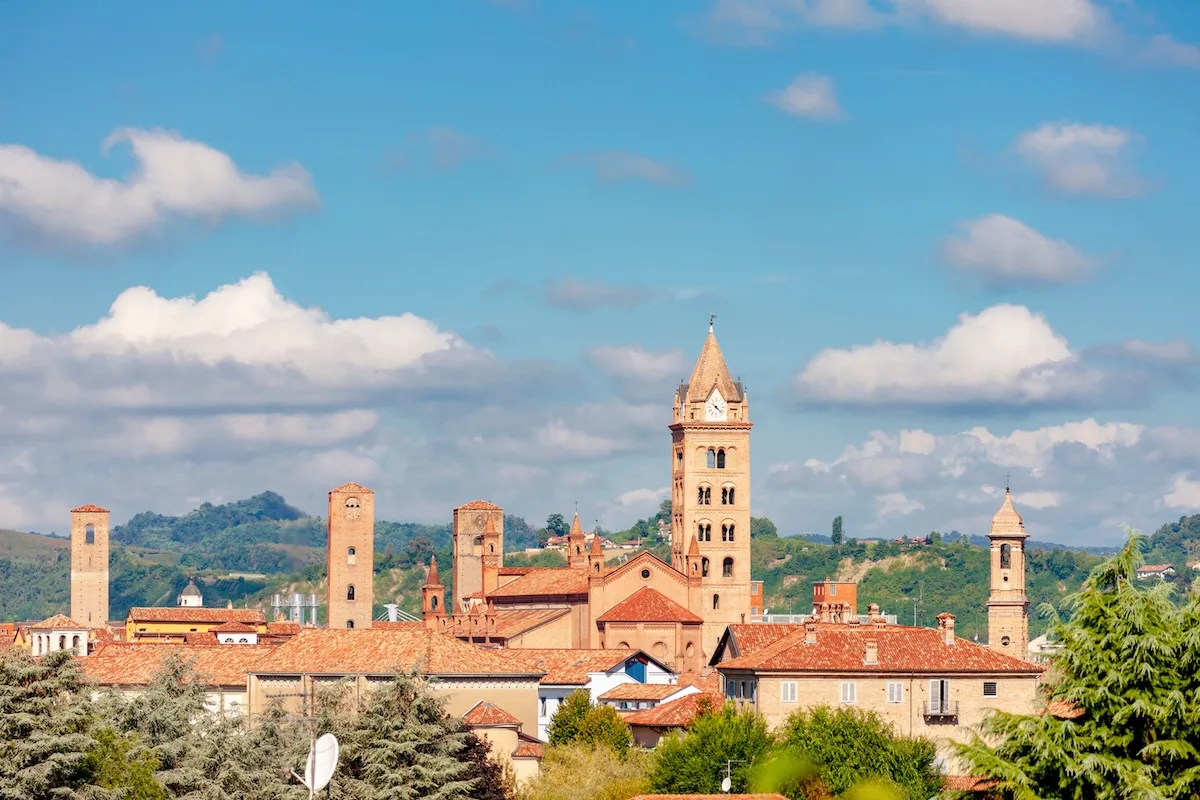
Alba, the refined capital of the Langhe, is home to numerous medieval towers commissioned by noble families between the 13th and 14th centuries. Most of them stand within the historic centre, although many no longer retain their original height. The towers that can still be admired in their entirety are the Torre di Palazzo Marro, Torre Bonino, Torre Sineo and Torre Astesiano.
 Alba
Albenga
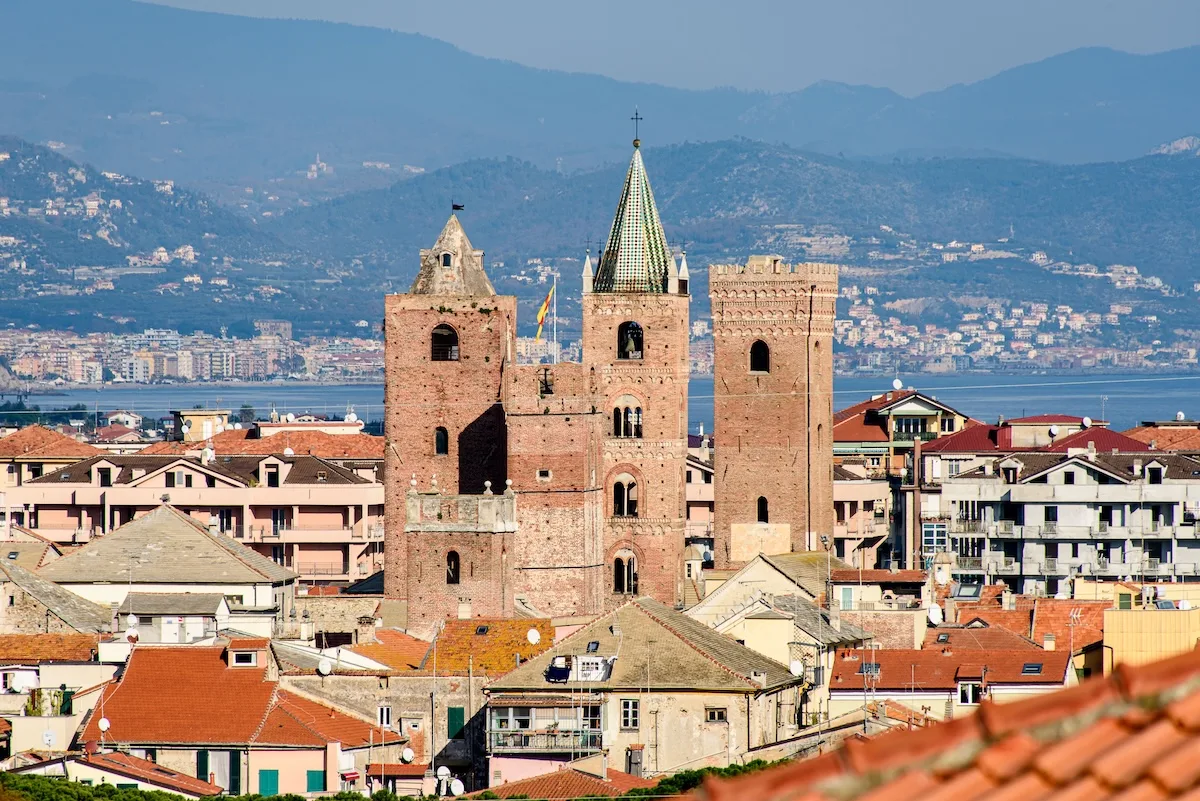
Albenga towers date mainly from the 13th century, although their histories have unfolded very differently. Some have collapsed over time, while others remain remarkably well preserved. Most of the towers lie within easy walking distance of the historic centre, making them ideal to explore on foot.
Those well worth including on your route are Torre Navone, the Cathedral Bell Tower, Torre Oddo, Torre Lengueglia d’Oria, Torre Peloso Cepolla, Torre Rolandi Ricci, Torre Cazzulini, the Santa Maria in Fontibus Bell Tower, Torre Comunale, Torre Conti Cepollini, Torre del Municipio, Torre Lengueglia Costa, and Torre della Paciotta.
 Albenga
Ascoli Piceno
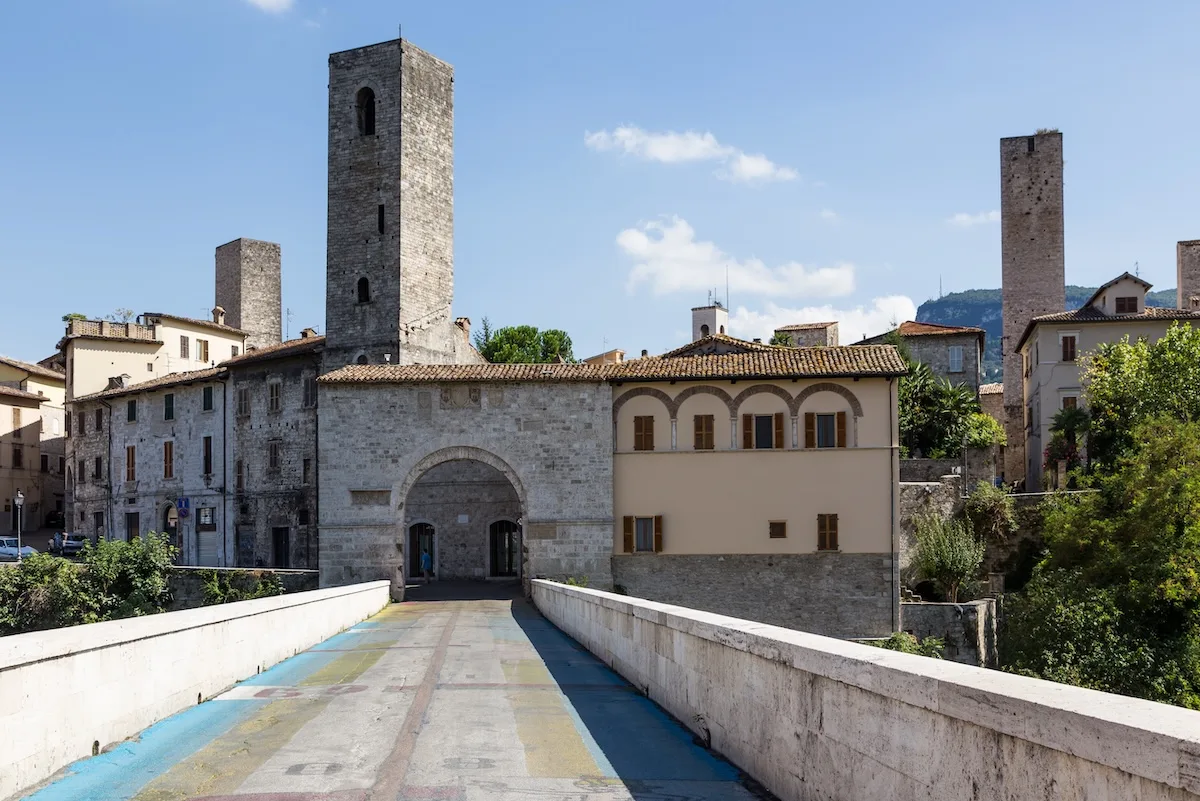
Ascoli was once an important aristocratic city, characterised by its many private tower houses. Around 50 of these towers still survive today, although not all of them remain intact. Some have been altered over time, either incorporated into religious buildings or absorbed into later residential properties.
Among the most notable are the Tower of St Venantius, the Ercolani Tower and the so-called Twin Towers. The historic centre can be explored by joining one of the guided tours, which usually also include the beautiful Piazza del Popolo.
 Ascoli Piceno
Asti
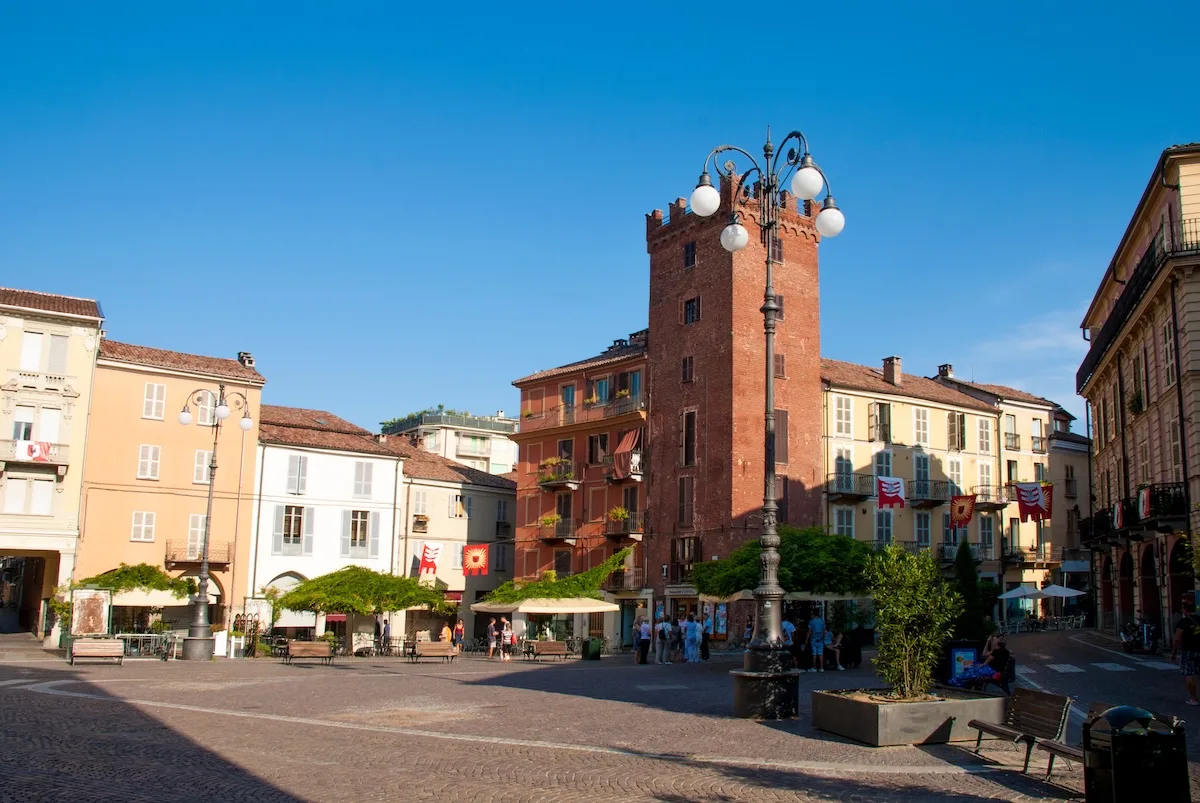
In the 12th century, many families in Asti built fortified residences, typically incorporating a tower. This is how the city came to be known as the “city of a hundred towers.” Today, only around twenty of these towers still survive. They range from the Trojan Tower, also known as the Clock Tower, to the Guttuar Tower, and from the Comentina Tower (or Tower of San Bernardino) to the tower of the Roero family’s fortified house in Monteu.
 Asti
Bologna
Of the more than 100 towers that once rose above Bologna and earned it the nickname “the turreted city”, most of them built for military defence or by powerful families as symbols of prestige, only 28 remain today (or 22, if you exclude those that are not strictly towers, such as bell towers and torresotti, the city’s characteristic turreted gateways).
The most famous are the Torre degli Asinelli, which stands 97 metres high and is climbed via a staircase of 498 steps, and the leaning Torre Garisenda, both located in the historic centre. Other notable examples include Torre Prendiparte, Torre Azzoguidi, and the Oseletti, Galluzzi, and Guidozagni towers.
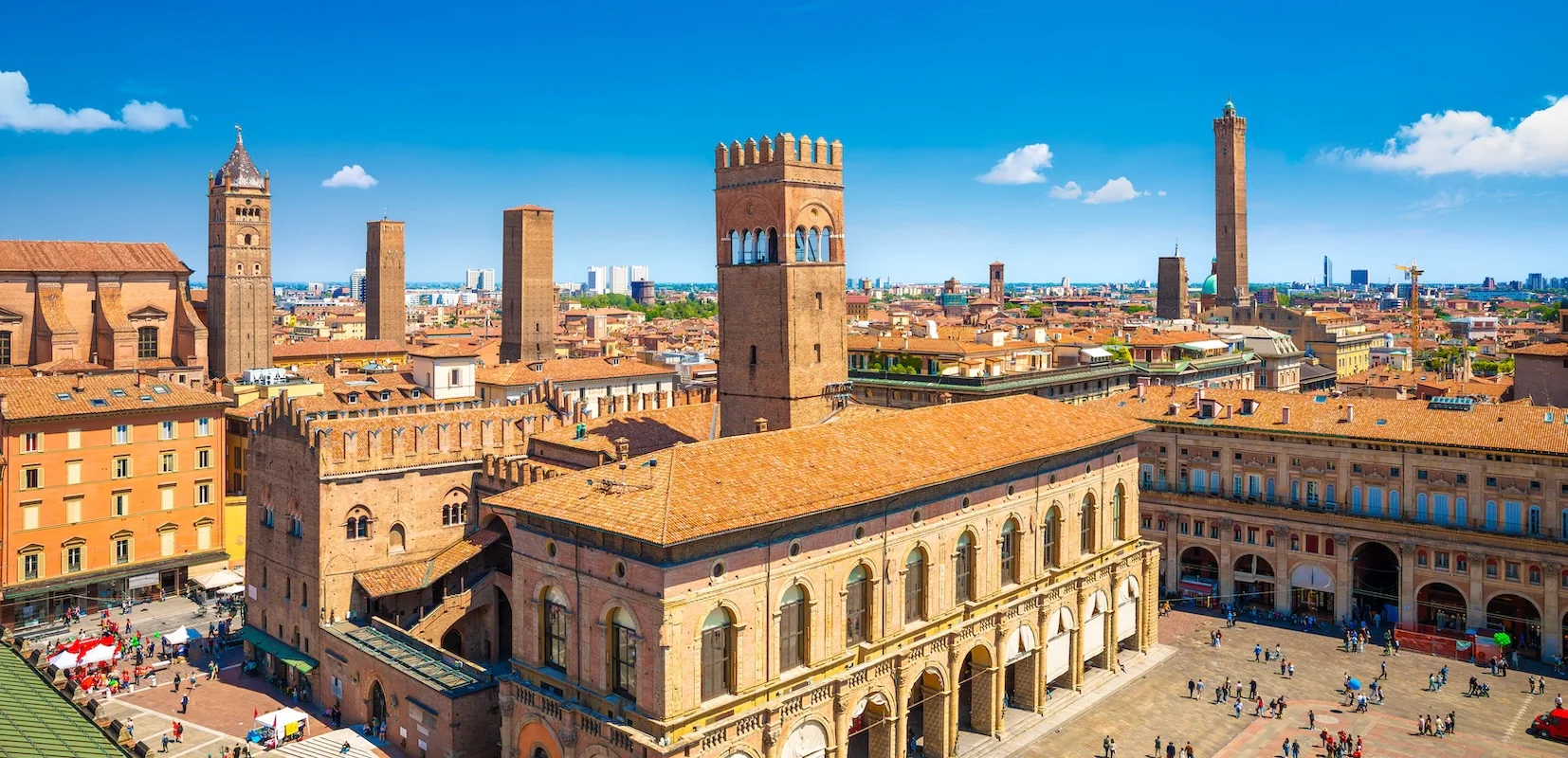 Bologna
Chieri
From the 11th century onwards, numerous towers were constructed in Chieri to observe and defend the city. Today, only the Ferrero Tower survives in the historic centre, standing free from surrounding buildings. The best place to admire it is the centrally located Piazza Cavour, which is also home to several other historic structures. Other towers can be found further from the centre, including one near the aqueduct.
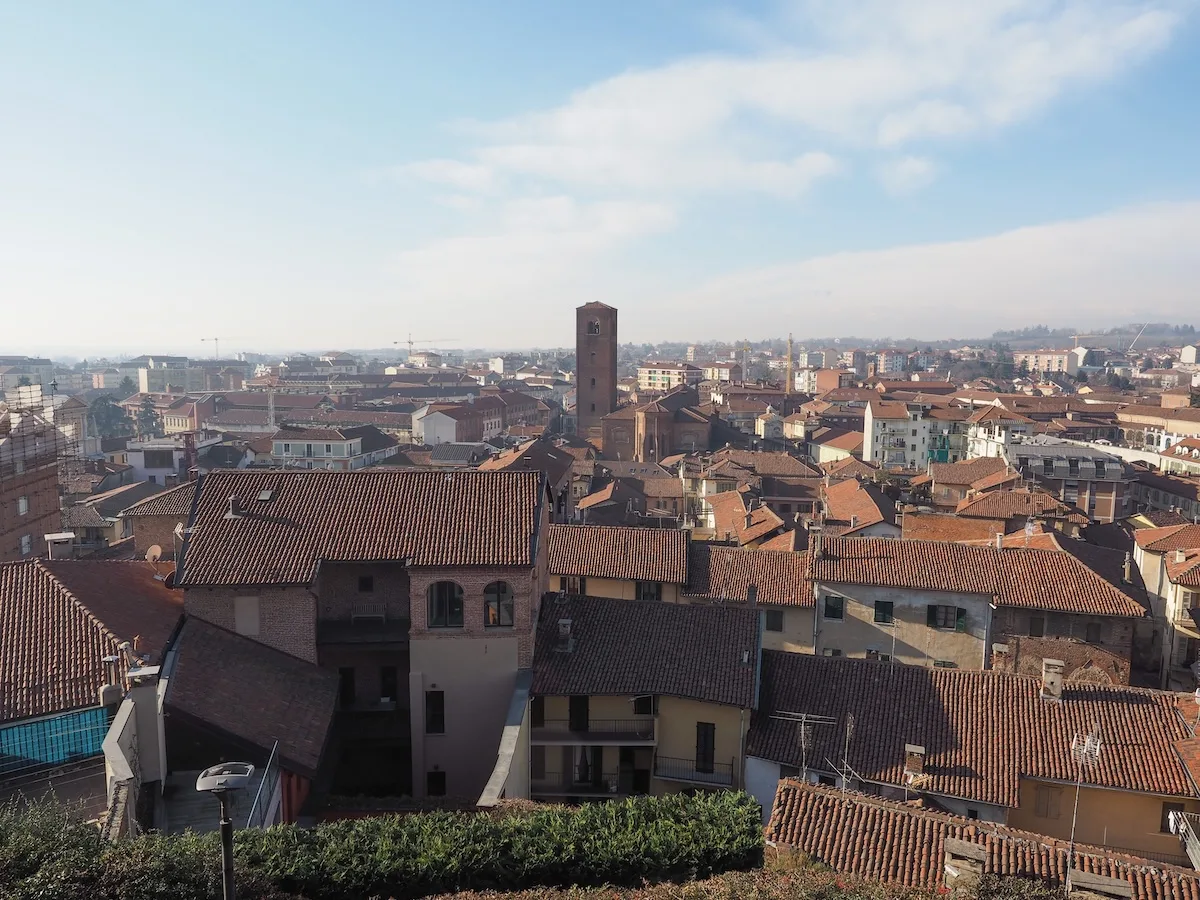 Chieri
Lucca
Lucca is renowned for its medieval noble towers, several of which are still open to visitors today. The most notable are the Torre Guinigi, standing 44.25 metres tall and famous for its rooftop hanging garden, and the Torre delle Ore (the Clock Tower), which rises to 50 metres and offers stunning panoramic views over the city. The tower takes its name from the historic clock it houses, whose hand-wound mechanism can still be admired.
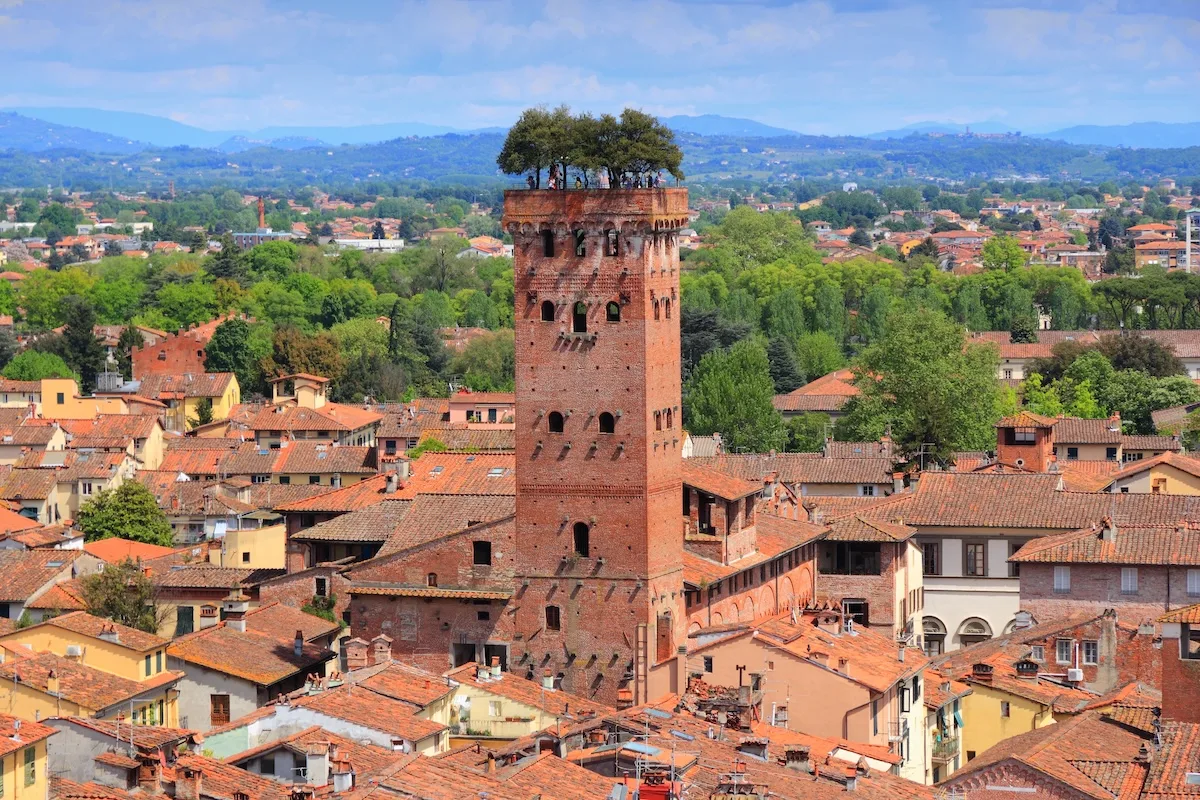 Lucca
Pavia
Pavia has long been known as the city of a hundred towers. Although many once rose above the skyline during the Middle Ages, only a handful survive today, as others have either collapsed or been demolished over time.
Among those that can still be admired is the 51-metre-high Maino Tower, which stands in Leonardo da Vinci Square. The San Dalmazio and Belcreda towers, by contrast, are located on Luigi Porta Street, while the Tower of Casa Lacchini can be found in Borromeo Square.
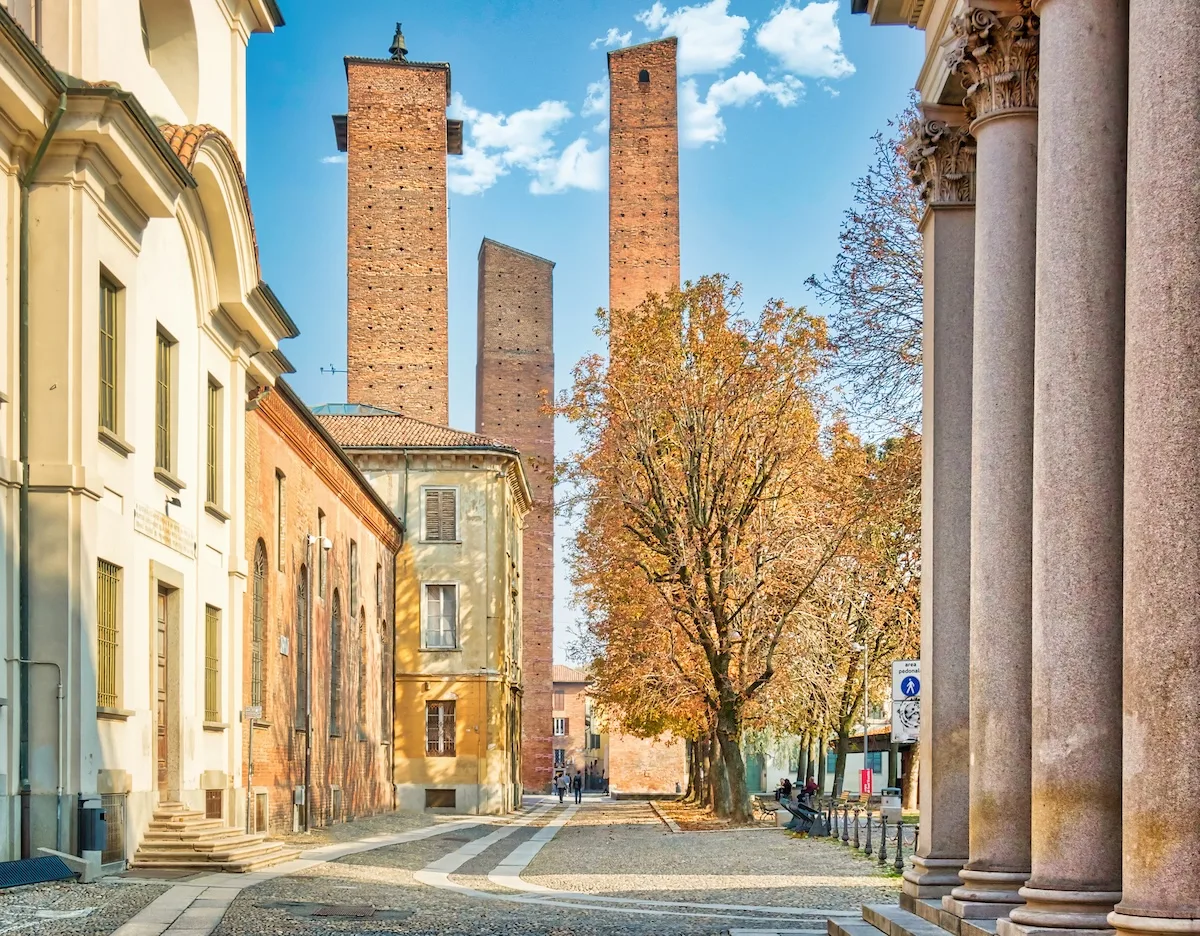 Pavia
San Gimignano
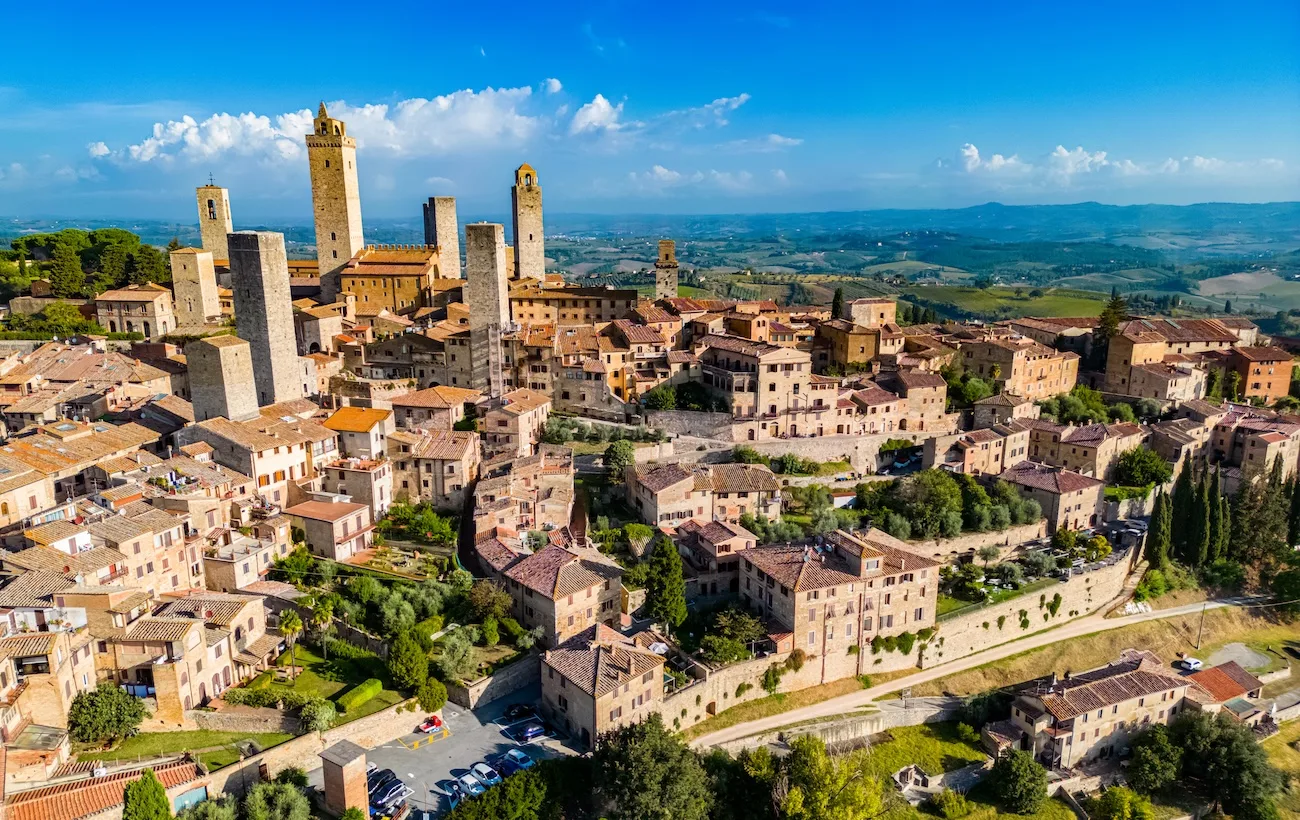
San Gimignano is the city of towers par excellence, famed for its striking skyline shaped by the 14 medieval towers that still stand today. The best known among them are Torre Grossa, the tallest at 54 metres, which rises beside the Palazzo Nuovo del Podestà; Torre del Diavolo, located to the north of Piazza della Cisterna; and the Rognosa Tower, which reaches 52 metres in height. The entire historic centre is a UNESCO World Heritage Site and is easily explored on foot, making it a pleasure to wander through its narrow streets and discover its towers and hidden corners at a leisurely pace.
 San Gimignano
Viterbo
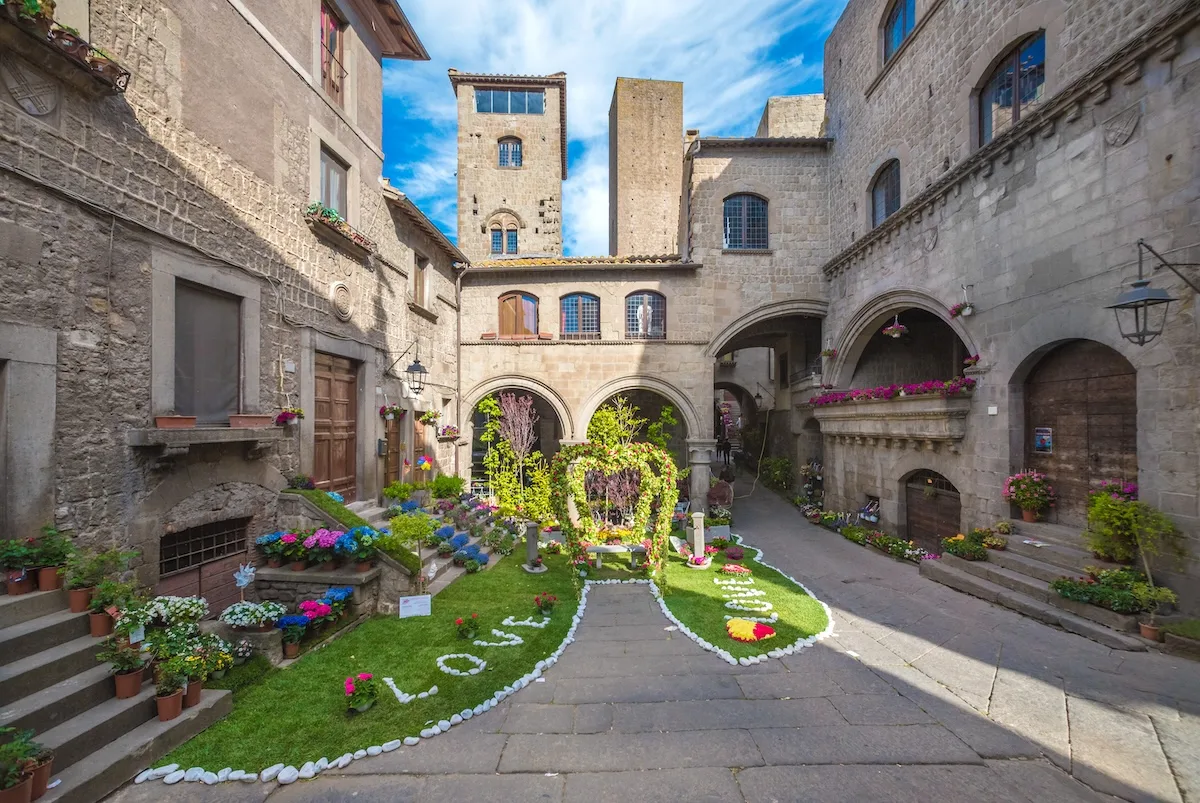
“Viterbo is the city of a hundred churches, a hundred fountains and a hundred towers,” as the saying goes. The city’s medieval centre still preserves numerous civic and bell towers. According to some sources, there were originally as many as 197, although not all have survived intact to the present day.
Among the towers that can still be visited is the Civic Tower, also known as the Tower of the Priors or the Monaldeschi Tower, which has undergone several phases of restoration over the centuries. In the 15th century, one of the earliest public clocks was installed there.
You can also admire the Borgognone Tower, located in the central Piazza del Gesù, and the San Biele Tower, dating back to 1270, which stands well beyond the city walls.
 Viterbo
Tarquinia
Although it is best known for its Etruscan tombs, Tarquinia also retains a remarkable legacy of medieval towers and buildings. Many of these can be seen along the route from the Archaeological Museum.
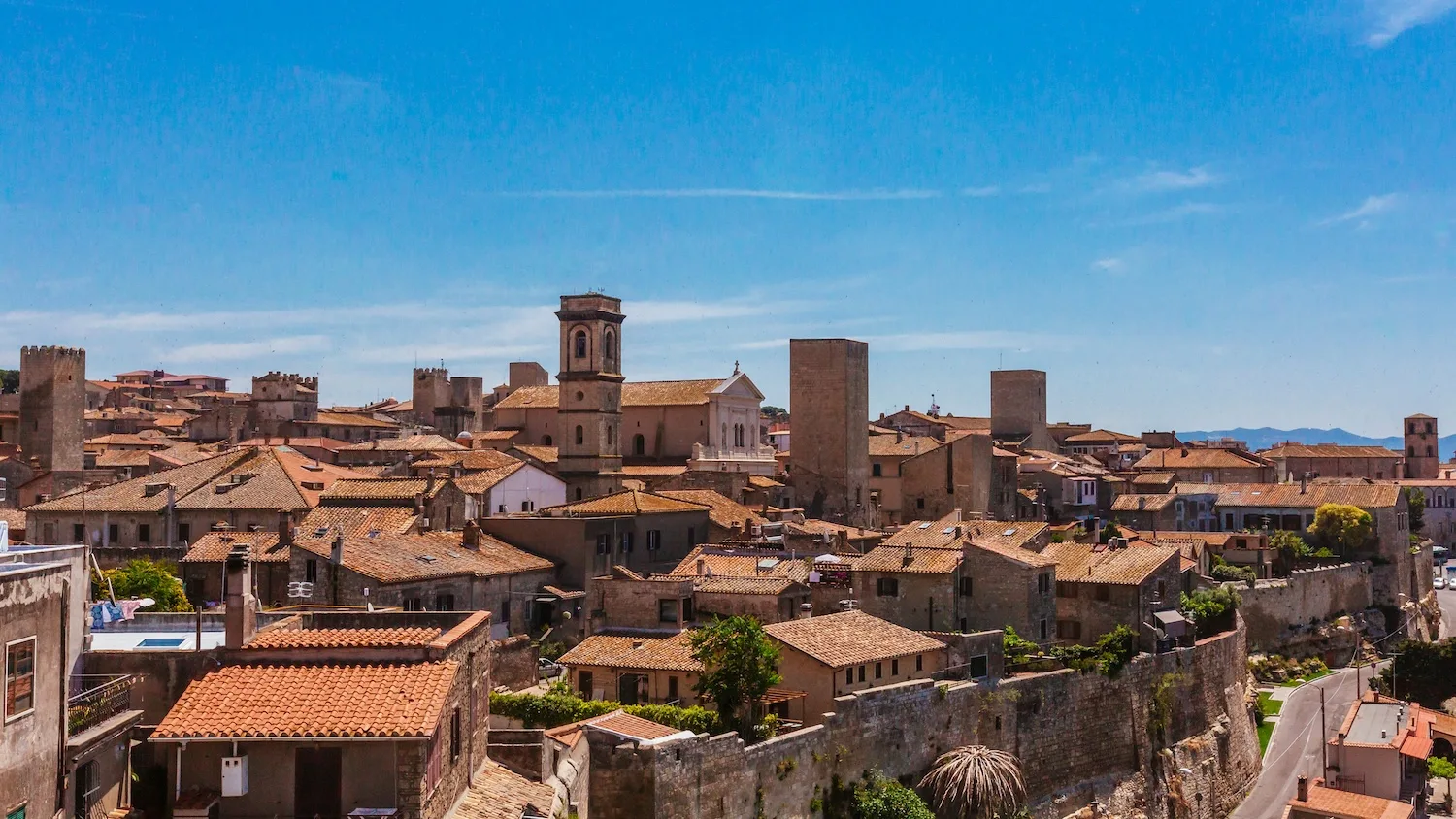
Medieval Tarquinia lies almost entirely within its ancient circuit of walls, which remain largely intact. Around fifty towers have survived, though they are often difficult to identify as many were truncated and incorporated into later buildings. Notable examples in the historic centre include Torre Portaia della Maddalena (also known as Torre Dante), the rectangular Torre Draghi, and Torre Barucci.
 Tarquinia
Prague: the European city of a hundred towers
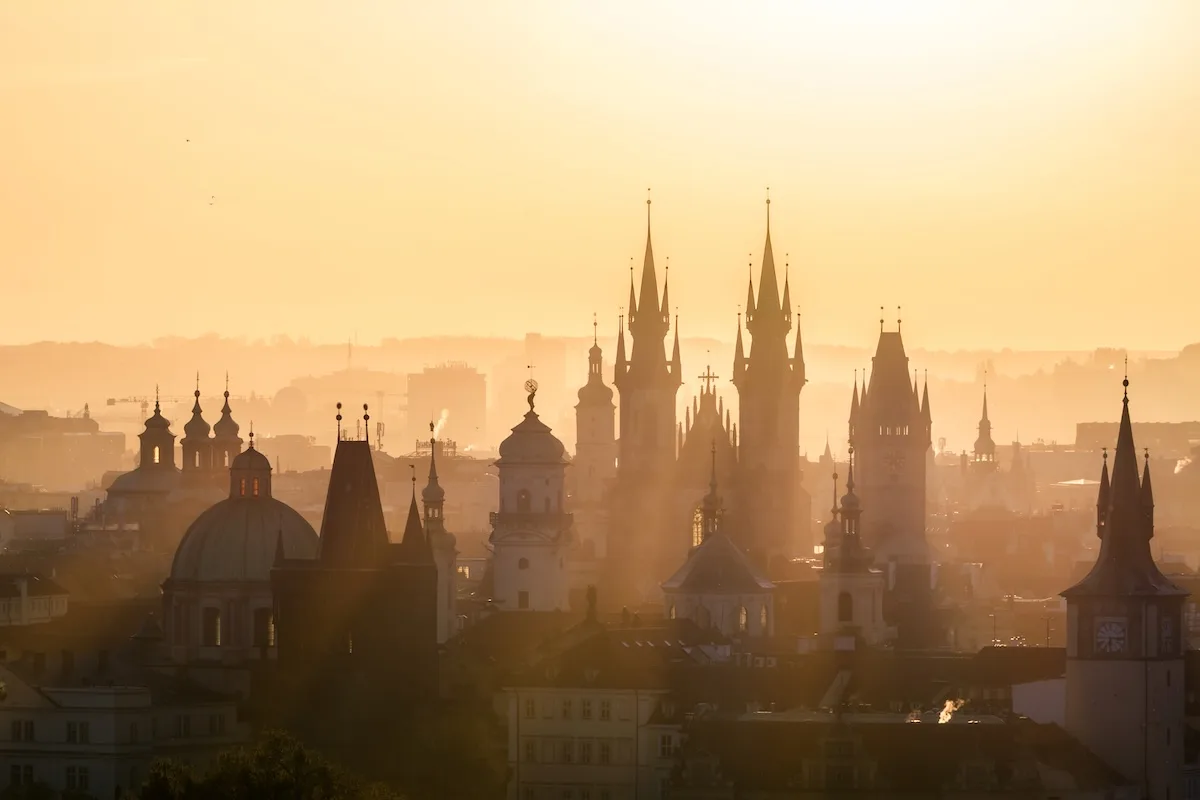
The reason Prague is nicknamed the city of a hundred towers is easy to understand. In fact, the city boasts more than 500 bell towers, defensive towers and Gothic spires that shape its distinctive skyline. Among the sights not to be missed are:
- the Old Town Bridge Tower, an impressive example of Gothic architecture;
- the Lesser Town Bridge Towers, a pair of towers linked by a small bridge;
- the New Mill Water Tower;
- the Nové Mlýny Water Tower, standing on the right bank of the Vltava River.
Many of Prague’s towers are open to visitors, offering unique views over the city.
 Prague
*Article translated by Agnese Giardini
 Subscribe to our newsletter
 to keep up to date with our latest news
Subscribe with your email address to receive the latest news, updates and practical tips from the real estate world directly in your inbox
