Most travellers arriving in Rome by train pass through Termini Station, a vast railway hub that welcomes a cosmopolitan crowd in constant motion every day.
Thousands of people cross its platforms daily, from tourists just stepping into the capital to commuters and long-distance travellers on their way elsewhere. Yet few realise that just beyond the tracks lies a treasure trove of history and culture: Baroque churches, archaeological museums, monumental squares, and characterful neighbourhoods all within easy walking distance.
Whether there are only a couple of hours to spare or an entire day to explore, Termini makes an ideal starting point for discovering some of the Eternal City’s most unexpected corners, no need for buses or taxis.
So, which landmarks are worth reaching on foot? And which churches, museums, and districts best capture the true spirit of Rome just outside the station?
What to see around Termini Station in Rome
Stepping off the tracks at Rome’s Termini Station, visitors find themselves immersed in a neighbourhood that holds far more history and beauty than one might expect from a transit hub.
Within just a few minutes’ walk, it’s possible to admire churches designed by Michelangelo and Bernini, Renaissance fountains, archaeological museums, and grand piazzas.
Here’s what to see around Termini Station, starting from the nearest landmarks to those reachable with a short stroll.
Santa Maria degli Angeli e dei Martiri
Roughly 400 metres from the platforms, in Piazza della Repubblica, stands the Church of Santa Maria degli Angeli e dei Martiri. In his later years, Michelangelo transformed part of the vast Baths of Diocletian into a place of worship, preserving the imposing Roman walls and adapting them to Christian liturgy.
Inside, visitors can admire the meridian line designed by Francesco Bianchini: a brass strip runs across the floor, and through a small opening in the dome, sunlight marks the solstices and equinoxes.
Piazza della Repubblica and the Fountain of the Naiads
After a 450-metre stroll, one reaches Piazza della Repubblica, where the Fountain of the Naiads takes pride of place. When it was unveiled in 1901, it immediately became the subject of lively debate in Rome’s salons and cafés: the bronze figures sculpted by Mario Rutelli, with their sinuous and sensual forms, were considered far too daring for the conservative society of the time.
The controversy, rather than diminishing its allure, only enhanced it, turning the fountain into one of the most celebrated symbols of modern Rome. Today, the square is an elegant city hub, animated by grand hotels and bustling cafés that lend it a cosmopolitan atmosphere.
Largo Santa Susanna
Around 600 metres from Termini Station lies Largo Santa Susanna, dominated by the church that shares its name. The façade, designed by Carlo Maderno, represents a turning point in Roman architecture: its columns and pediments move with a newfound dynamism, heralding the arrival of the full Baroque style.
Inside, the church recounts the story of the young martyr Saint Susanna, to whom it is dedicated. A curious detail: for decades, this was the meeting place of Rome’s American community, where Mass was celebrated in English.
Fontana dell’Acqua Felice (Fountain of Moses)
Roughly 650 metres from the station stands the Fontana dell’Acqua Felice, better known as the Fountain of Moses. Inaugurated in 1587, it commemorated the aqueduct commissioned by Pope Sixtus V, which restored running water to an area that had been dry for centuries. The monumental statue of Moses initially baffled Romans, who found it heavy and disproportionate.
Yet despite the criticism, its impact was profound: it marked the triumphant return of water to the city and inaugurated the era of grand Roman fountains, an artistic tradition that would culminate a century later with the Trevi Fountain.
Church of Santa Maria della Vittoria
Just 700 metres from the station, on Via XX Settembre, stands the Church of Santa Maria della Vittoria, home to one of the masterpieces of European Baroque: Bernini’s Ecstasy of Saint Teresa.
The artist did not merely sculpt the moment of the saint pierced by the angel, but created a true theatrical experience. Golden light filters from above, polychrome marble frames the chapel, and statues of cardinals gaze upon the scene from side boxes, as if they were spectators in a theatre.
Via Nazionale
Around 700 metres from Rome’s Termini Station lies Via Nazionale, a grand boulevard built in the nineteenth century to connect Piazza della Repubblica with Piazza Venezia. Today it serves as one of Rome’s main shopping streets, yet it also preserves architectural landmarks from the city’s post-unification era.
The most renowned among them is the Palazzo delle Esposizioni, inaugurated in 1883 and still a prestigious venue for international exhibitions ranging from contemporary photography to classical art.
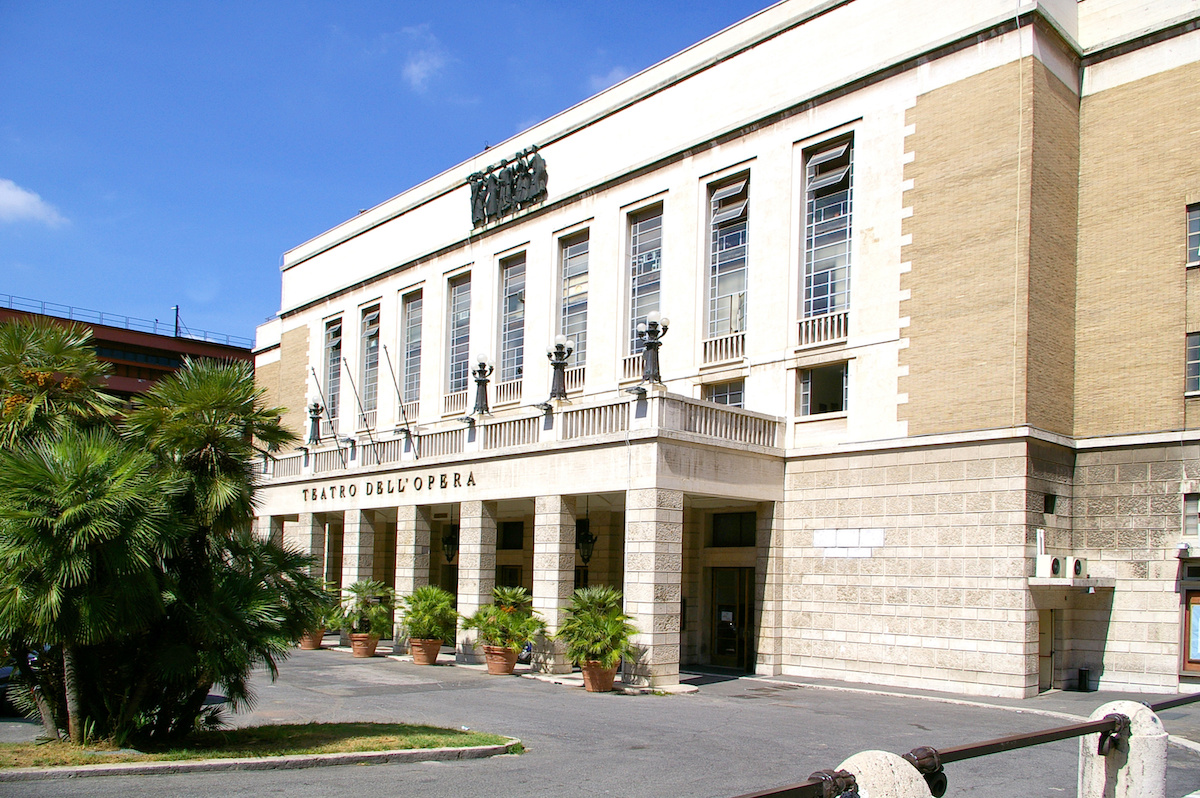 Rome Opera House
Also about 700 metres from Termini stands the Teatro dell’Opera di Roma, originally opened in 1880 as the Teatro Costanzi. Its remarkable acoustics quickly earned it fame; it was here, in 1948, that Maria Callas made her Italian debut.
The theatre continues to host an annual season of opera and ballet that attracts enthusiasts from across the world. Even viewing its exterior today evokes the refined elegance of nineteenth-century Rome.
Papal Basilica of Saint Mary Major
On the Esquiline Hill, about 600 metres from Termini, stands the Basilica of Saint Mary Major, one of the most majestic sites in Christendom. Founded in the fifth century, it continues to astonish visitors with its mosaic cycle that unfolds like an ancient illustrated tale: vividly coloured figures narrate episodes from the Old and New Testaments, as if part of a grand sacred fresco in motion.
The ceiling, gilded with the first gold brought from the Americas, glows with a warm light that binds Rome to global history. Among the treasured relics is the so-called Holy Cradle, fragments of wood traditionally associated with the Nativity.
Palazzo Massimo alle Terme
Just 500 metres from the station lies Palazzo Massimo, home to the National Roman Museum, one of the most captivating destinations for lovers of antiquity. Amid mosaics and sculptures, the frescoes from the Villa of Livia stand out: they recreate a luxuriant garden, where trees and birds are painted with astonishing realism.
Walking through its halls feels like stepping into an imperial villa frozen in time.
San Carlo alle Quattro Fontane
Around 950 metres from Termini stands the Church of San Carlo alle Quattro Fontane, a small yet dazzling masterpiece by Borromini. Working within an exceptionally narrow space, the architect devised a structure that seems to expand through a play of curves and intricate geometries.
Outside, the four fountains represent allegories of the Tiber, the Arno, and the deities Diana and Juno, giving the crossroads where the church stands a uniquely theatrical charm.
Sant’Andrea al Quirinale
Roughly a kilometre from the station lies the Church of Sant’Andrea al Quirinale, one of Bernini’s most theatrical masterpieces. The light filtering from above draws the gaze towards the altar, while the gilded dome heightens the sense of drama. For centuries, the church housed the Jesuit novitiate, and to this day it remains a striking blend of spirituality and Baroque splendour.
Fontana dei Dioscuri
Around 1.1 kilometres from Termini, in Piazza del Quirinale, stands the Fountain of the Dioscuri, flanked by the monumental statues of Castor and Pollux. The Egyptian obelisk beside them lends an ancient touch to a square that now forms the political heart of Italy, dominated by the Quirinal Palace, the official residence of the President of the Republic. The panoramic view from here, with Rome’s rooftops and domes unfolding in the distance, is among the city’s most enchanting.
Monti District
About a kilometre from the station lies the Monti district, a neighbourhood brimming with authentic character. Its cobbled lanes, artisan workshops and family-run trattorias make it an inviting place to pause and unwind. Once a working-class area inhabited by gladiators and craftsmen, Monti is now one of Rome’s most cherished quarters, celebrated for its bohemian spirit and lively nightlife.
Via Veneto
Just over a kilometre from Termini lies Via Veneto, made immortal by Federico Fellini’s La Dolce Vita. In the 1960s it was Rome’s international drawing room, frequented by Hollywood stars and paparazzi in search of the next scoop.
Today it remains an elegant boulevard, lined with luxury hotels and historic cafés that continue to evoke the timeless allure of La Dolce Vita.
Domus Aurea
Around 1.5 kilometres from Rome’s Termini Station, on the Oppian Hill, lie the underground chambers of the Domus Aurea, the grand residence Emperor Nero commissioned after the Great Fire of AD 64.
More than a simple palace, it was a city within the city: artificial lakes, gardens, and halls adorned with marble and gold leaf spoke of imperial extravagance. What survives today are subterranean rooms that still preserve frescoes of remarkable refinement.
During the Renaissance, artists such as Raphael and Michelangelo descended into these “grottoes” to copy their decorations, giving birth to the artistic style that became known as the grotesque.
How to plan a walking itinerary near Termini Station: some useful tips
The area around Rome’s Termini Station lends itself easily to an itinerary that can be tailored to the time available. Here are a few suggestions for making the most of the beauty nearby:
- With two hours to spare, it’s best to stay close to the station: stop at Santa Maria degli Angeli e dei Martiri, continue to Piazza della Repubblica with its spectacular fountain, and finish with a visit to the Basilica of Santa Maria Maggiore, less than a ten-minute walk away.
- With half a day available, the route can be extended to include the Palazzo Massimo Museum, home to some of the finest frescoes and mosaics from ancient Rome, the church of Santa Maria della Vittoria with Bernini’s celebrated masterpiece, and a pleasant walk along Via Nazionale leading to the Teatro dell’Opera.
- With a full day, the itinerary becomes a real journey through the city: from Rione Monti, with its narrow streets filled with artisan workshops and trattorias, to Via Veneto, the symbol of La Dolce Vita, and finally the Domus Aurea on the Colle Oppio, where visitors can explore the grand spaces created by Nero after the fire of AD 64.
Getting around on foot remains the best option: distances are short and reveal hidden corners that capture the most authentic spirit of Rome.
 Subscribe to our newsletter
 to keep up to date with our latest news
Subscribe with your email address to receive the latest news, updates and practical tips from the real estate world directly in your inbox
