La Fenice Theatre, in Venice, is renowned worldwide for its eventful history and its pivotal role in the world of opera and theatre.
Over the years, it has had the honour of welcoming some of the greatest composers of all time, from Rossini and Donizetti to Giuseppe Verdi.
This is the story of La Fenice, how it has evolved through the centuries, where it stands today, and how it can be visited.
Where the Teatro La Fenice is located in Venice
The Teatro La Fenice is situated in the San Marco district, specifically in Campo San Fantin, tucked away among the narrow lanes and charming alleys that characterise Venice. Perfectly positioned in the heart of the city, it lies just a few minutes from iconic landmarks such as St Mark’s Square and the Grand Canal, in an area that is both convenient and well connected.
How to get to the Teatro La Fenice in Venice
The easiest way to reach the theatre is by vaporetto along the Grand Canal, disembarking at either the Santa Maria del Giglio or Rialto stop. From both, it is only a short walk through Venice’s winding calli and over its small bridges to reach the heart of the San Marco district.
Alternatively, visitors can also arrive by gondola or water taxi, docking directly along the canals that surround the theatre.
When Teatro La Fenice was founded
Teatro La Fenice in Venice was built beginning in 1790 at the initiative of the Noble Society of Venetian Box Holders. After losing ownership of the San Benedetto Theatre following a legal dispute, the members decided to construct a new venue: grander and more prestigious than the one they had lost.
The name La Fenice (“The Phoenix”) was chosen as a clear reference to the mythological bird reborn from its own ashes, symbolising renewal and resilience.
Since its inauguration in 1792 with the performance of I giochi di Agrigento, the theatre has embodied that very spirit, establishing itself as one of the most celebrated stages for Italian and European opera.
Structure and characteristics of La Fenice Theatre
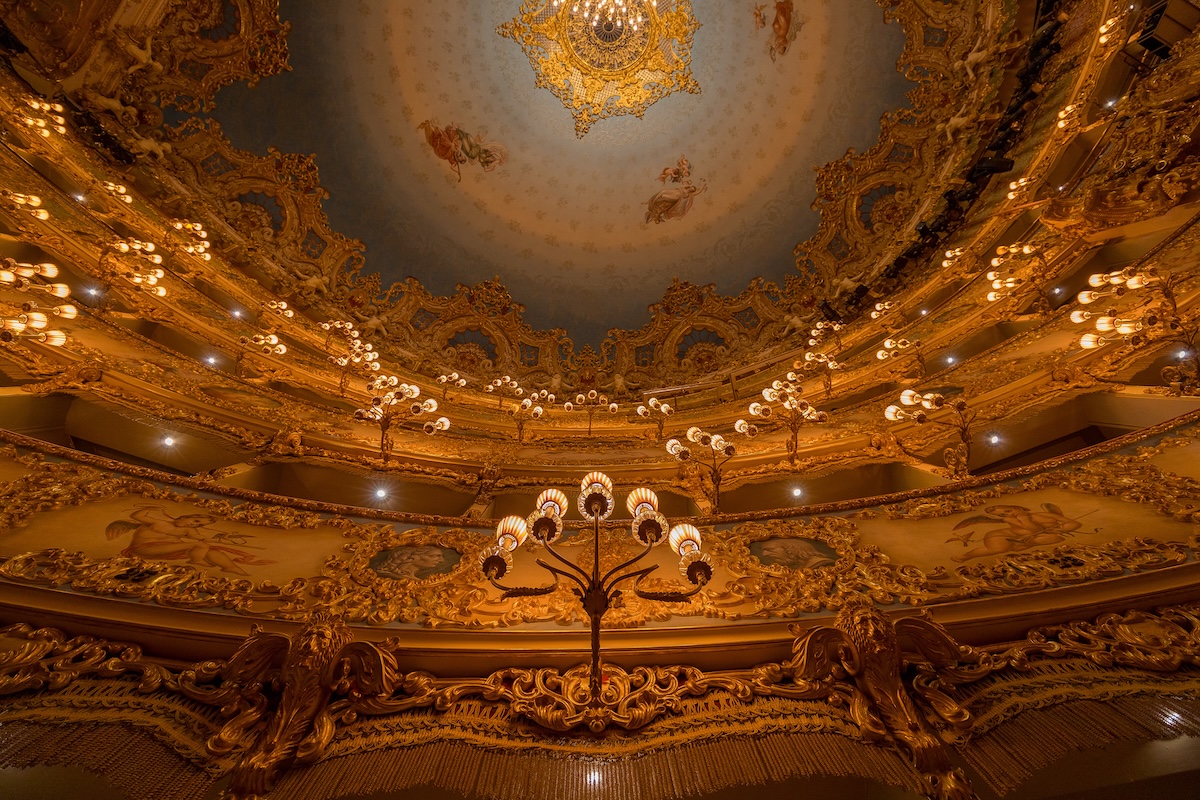
La Fenice Theatre in Venice was designed by the architect Gian Antonio Selva, who won the competition launched in 1789 by the Noble Society of Box Holders. Over the years, it has preserved its original neoclassical appearance.
From a structural point of view, La Fenice follows the typical model of the Italian-style theatre:
- horseshoe-shaped auditorium, ideal for acoustics and visibility;
- five tiers of overlapping, ornate boxes that give the hall its distinctive scenic character;
- central stalls area, accommodating around 600 spectators;
- total capacity of about 1,000 seats, distributed among stalls, boxes, and gallery;
- stage.
The building has an irregular floor plan, designed to make the best use of the available space, distinguishing it from all other eighteenth-century theatres.
Fires and renovations: the history of the theater
Venice’s Teatro La Fenice has witnessed several episodes of destruction and rebirth throughout its history.
The fire of 1836
Between 12 and 13 December 1836, a devastating fire completely destroyed the theatre.
The reconstruction was entrusted to architects Giovanni Battista and Tommaso Meduna, with Tranquillo Orsi overseeing the interior design. The works progressed swiftly, and the theatre reopened on 26 December 1837.
Later restorations
In the following decades, La Fenice required two major restoration projects:
- in 1854, structural reinforcement of the ceiling and decorative restoration were carried out;
- between 1915 and 1918, further renovations became necessary due to damage and neglect during the First World War.
The 1996 fire
On 29 January 1996, another fire almost entirely destroyed the theatre once again. Reconstruction was led by architect Aldo Rossi, who followed the principle of “com’era, dov’era” (“as it was, where it was”), faithfully recreating the building in accordance with its historic design. La Fenice officially reopened in 2003, preserving the grandeur and spirit that had long defined its reputation.
How to visit La Fenice Theater
There are two ways to visit La Fenice: by attending a performance or by joining a guided tour of the theatre.
The guided tours offer an opportunity to explore the auditorium, the boxes, the stage, and to learn about the theatre’s fascinating history: from its ornate decorations to the stories of the fires and subsequent reconstructions.
Tours usually run daily from 9:30 a.m. to 6 p.m., although times may vary depending on the season and scheduled performances. Visitors are advised to check the official website for the latest information and to make reservations in advance.
Article translated by Agnese Giardini
 Subscribe to our newsletter
 to keep up to date with our latest news
Subscribe with your email address to receive the latest news, updates and practical tips from the real estate world directly in your inbox
