In the heart of Genoa, overlooking Via Balbi, stands one of the most captivating examples of seventeenth-century noble architecture: Palazzo Reale, a former aristocratic residence transformed into a museum and listed as a UNESCO World Heritage Site since 2006.
What makes this landmark so remarkable? What is its story, what treasures does it preserve, and how can one plan a visit? Let’s explore it together.
The origins of the Royal Palace of Genoa
Construction of the Royal Palace began in 1643 at the request of the noble Balbi family, a powerful Genoese dynasty deeply connected to finance and commerce. Conceived as a private residence, the building was intended to showcase the family’s prestige, reflecting the principles of Genoese Baroque architecture, elegant yet imposing in style.
A few decades later, in 1677, the palace was acquired by the Durazzo family, who expanded its structure and adorned it with new decorations, frescoes, and opulent furnishings, transforming the residence into a vibrant cultural and social hub for Genoa’s aristocracy.
In 1824, the property was purchased by the House of Savoy, which turned it into the official royal residence in Genoa. From then on, it became known as the “Royal Palace” and underwent further modifications, though much of its original decoration was carefully preserved.
Today, the palace is part of the Italian state heritage and houses the Gallery of the Royal Palace, along with the offices of the Superintendencies of Liguria.
A journey through art and history
Visiting the Royal Palace today means stepping into a journey that spans over three centuries of art, architecture and royal life.
The building extends across three floors and houses more than a hundred rooms, many of which are open to the public. The state rooms are among the most magnificent: frescoed ceilings, gilded stuccoes, Murano glass chandeliers and antique furnishings accompany visitors on a true voyage through time.
Among the most iconic spaces are:
- The Gallery of Mirrors: inspired by Versailles’ renowned Galerie des Glaces, it is one of the palace’s most spectacular settings;
- The Throne Room: richly decorated with frescoes and stucco work, it was once the stage for official ceremonies during the Savoy era;
- The Private Chapel: intimate and refined, adorned with elegant religious motifs.
The art collections
The Royal Palace boasts an extraordinary picture gallery featuring works from the 16th to the 18th century. Among the most celebrated artists represented are Van Dyck, Tintoretto, Guercino, Luca Giordano, Ferdinando Bibiena and many others.
Beyond its paintings, the collection also includes tapestries, fine porcelain and ceramics, sculptures and marble busts, as well as original furnishings once owned by the Balbi, Durazzo and Savoy families.
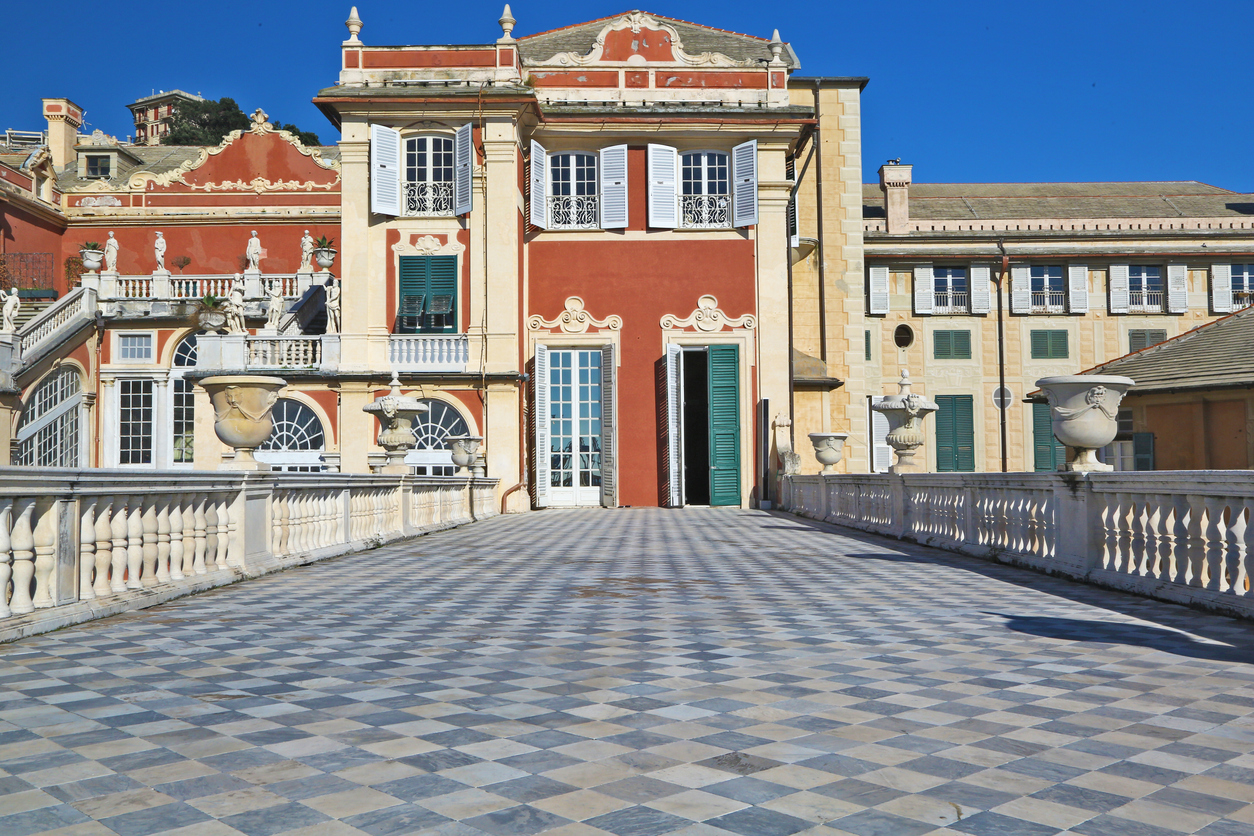
The garden and terrace
One of the Palace’s most enchanting corners is undoubtedly its hanging garden, which overlooks the old harbour. Designed in the Italianate style, with geometric flowerbeds and statues, this elegant green space offers a magnificent view of the city and the sea, a privilege once reserved for the most distinguished members of the court.
The Royal Palace today: museum and cultural center
The Royal Palace has been owned by the Italian State since 1919 and became part of the National Museum System in 2006. It is currently managed by the Regional Directorate of Museums of Liguria and hosts not only its historic collections, but also temporary exhibitions, cultural events, concerts, and educational activities for schools and families.
The museum also stands as a key example of active heritage preservation, with ongoing restoration work and research dedicated to furniture, painting, and sculpture.
How to visit the Royal Palace
Palazzo Reale is located at 10 Via Balbi, just a short walk from Genoa’s Piazza Principe railway station. The area is well served by public transport and can easily be reached on foot from the historic centre.
The museum is generally open from Tuesday to Saturday, from 1:30 p.m. to 7:00 p.m. (last admission at 6:30 p.m.). It is closed on Mondays but opens on the first and third Sundays of each month. Opening hours may vary during holidays or special events.
The full ticket price is €12, while the reduced rate (for students and visitors over 65) is €2.
Admission is free for children and visitors under 18, teachers, disabled visitors, and their carers. Entrance is also free on the first Sunday of every month.
Audio guides and guided tours are available upon reservation.
Article translated by Agnese Giardini
 Subscribe to our newsletter
 to keep up to date with our latest news
Subscribe with your email address to receive the latest news, updates and practical tips from the real estate world directly in your inbox
